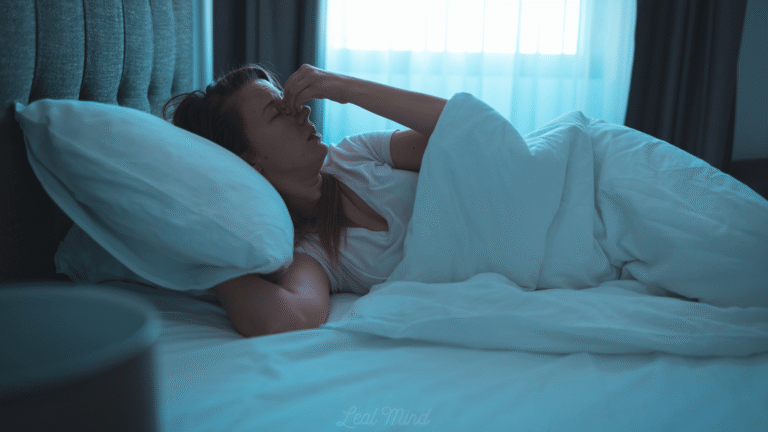
If you’ve been wondering why do I feel anxious at night for no reason, you’re not alone. Waking up at 3 AM with your heart racing, thoughts spiralling, and that sinking “something’s wrong” feeling? You’re not alone.
Research shows that 20–45% of people with panic disorder experience nighttime panic attacks. Even if you don’t have a diagnosed disorder, about 36% of people with sleep difficulties also struggle with sleep and anxiety issues.
So why does anxiety at night strike when everything should feel calm? The answer lies in a mix of biological, psychological, and environmental factors. To help you navigate these issues, let’s break down 9 hidden causes of nighttime anxiety and practical strategies to reclaim peaceful sleep.
Table of Contents
1. Night Anxiety Feels Different (Anxiety at Night Explained)
Night anxiety isn’t just your imagination—it actually operates differently than daytime worry.
- The “Mind After Midnight” effect: Studies show mood tends to dip between 1 AM and 4 AM, while racing thoughts peak in the evening.
- Biology of late-night worry: Your prefrontal cortex (rational thinking) becomes less active after dark, while your default mode network (self-reflection) becomes more active. For anxious minds, this inward turn fuels spiralling thoughts and constant anxiety.
- Fewer distractions: During the day, work, errands, and social interactions distract you. At night, your brain has nothing else to focus on—perfect for runaway anxiety and restlessness.
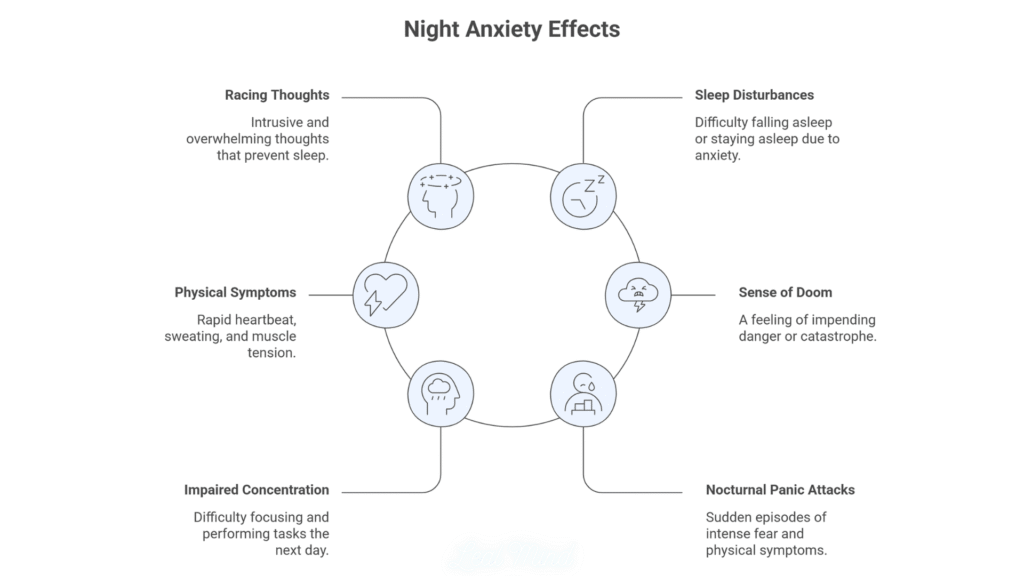
Anxiety symptoms you might notice:
- Racing or intrusive thoughts
- Difficulty falling asleep or staying asleep
- Rapid heartbeat, palpitations, or sweating
- Tense muscles or jaw pain
- Shortness of breath or chest discomfort
- Sense of impending doom
- Inability to concentrate the next day
Nocturnal panic attacks can also wake you suddenly, leaving you terrified and out of breath.
2. Hormonal Imbalance and Anxiety at Night
Stress hormones and neurotransmitters peaking at night can make you feel restless and unable to relax.
- Cortisol levels: Normally highest in the morning and lower at night. Chronic stress can keep cortisol elevated, leaving you restless.
- Norepinephrine and adrenaline: An adrenaline rush at night can trigger a racing heart, sweating, and heightened alertness.
- Hypothalamic-pituitary-adrenal (HPA) axis: This is the body’s main stress response system, involving the hypothalamus, pituitary gland, and adrenal glands. If it becomes dysregulated, it can disrupt your brain chemistry and sleep patterns.
Why 3–4 AM feels worse:
This is the window when cortisol should be lowest. If it isn’t, your body reacts to minor stress as if it’s life-threatening.
Tip: Maintaining a consistent bedtime helps regulate your cortisol rhythm and reduces nighttime spikes.
3. Sleep Deprivation, Anxiety and Insomnia
Not getting enough sleep amplifies anxiety and insomnia.
- A lack of REM and deep sleep impairs emotional processing, making your amygdala overactive.
- Even one night of poor sleep quality can make neutral situations feel threatening.
- Sleep anxiety disrupts rest and leads to a self-reinforcing cycle of insomnia and worry.
- Sleep disturbances alter sleep architecture, preventing restorative rest.
Sleep debt accumulates when you have multiple nights of insufficient rest, making your mind even more prone to late-night worry.
4. Overthinking and Anxiety Before Bed
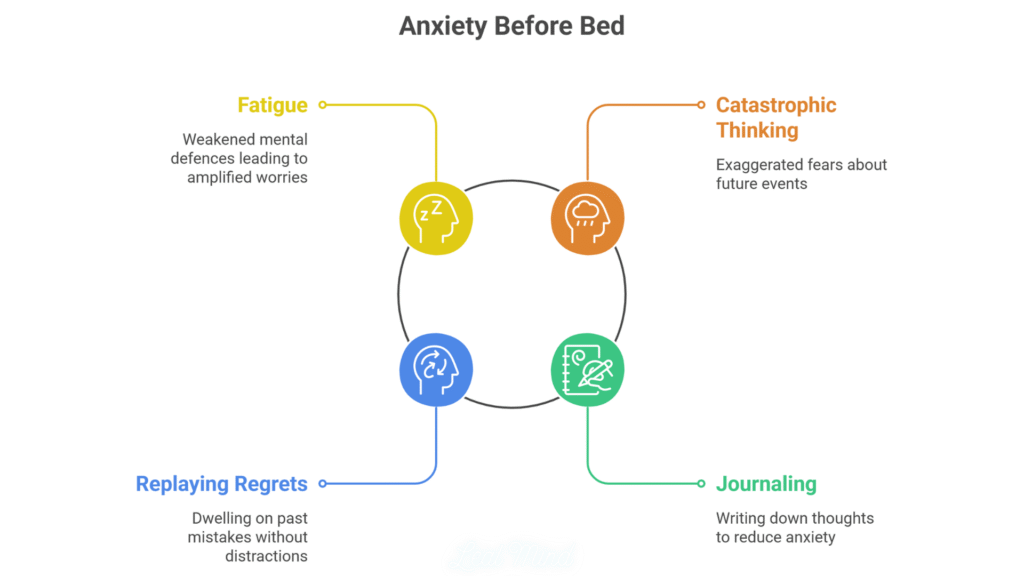
Quiet nights amplify thoughts, especially anxiety before bed.
- Fatigue weakens mental defences, letting worries feel bigger and triggering anxiety at bedtime.
- Catastrophic thinking (“What if I fail tomorrow?”) is common with stress and anxiety.
- Replaying conversations or regrets without daytime distractions fuels anxiety triggers.
Tip: Write a short to-do list or journal before bed to “offload” thoughts.
5. Circadian Rhythm Disruption and Night Anxiety
Your circadian rhythm affects mood and anxiety—disrupted schedules and blue light can throw off your circadian rhythm and mental health.
- Irregular schedules: “Social jet lag” occurs when your sleep times vary between workdays and days off, disrupting your body’s natural rhythms and melatonin (a sleep hormone) production.
- Screen time: Blue light exposure tricks your brain into thinking it’s daytime, making it harder to wind down.
- Shift work or travel: Night shifts or jet lag can elevate anxiety levels.
Tip: Keep a consistent sleep schedule and limit screens 30–60 minutes before bed.
6. Trauma, Stress, and Constant Anxiety
Sleep can uncover hidden emotional wounds and chronic anxiety:
- Post-traumatic stress disorder can cause nocturnal panic attacks or nightmares.
- Traumatic experiences and childhood trauma may leave your nervous system hyper-alert, even decades later.
- Subconscious memories can trigger anxiety when the brain is quiet.
- Mental health disorders often intensify during nighttime hours.
Tip: Processing trauma with therapy or structured journaling can reduce nighttime triggers over time.
7. Medical Causes of Sleep Anxiety
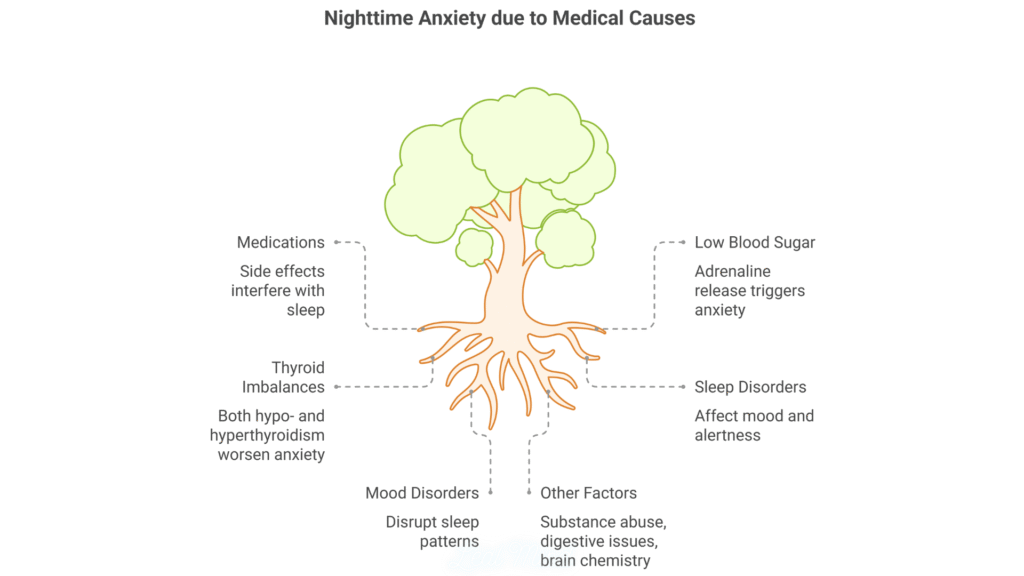
Some conditions and medication side effects can trigger nighttime anxiety:
- Medications: Certain antidepressants, steroids, thyroid meds, or decongestants can interfere with sleep.
- Low blood sugar: Drops in glucose levels at night trigger the release of adrenaline.
- Thyroid imbalances: Both hypo- and hyperthyroidism can worsen anxiety.
- Sleep disorders: Problems such as sleep apnea (repeated breathing interruptions during sleep), narcolepsy (excessive daytime sleepiness), restless legs syndrome (an urge to move your legs at night), sleepwalking, and nightmare disorder can affect mood and alertness.
- Mood disorders: Generalised anxiety disorder, bipolar disorder, major depression, and schizophrenia can all disrupt sleep patterns.
- Other factors: Substance abuse, digestive problems, and changes in brain chemistry can contribute to nighttime anxiety.
If anxiety feels extreme or sudden, consider consulting a healthcare professional to rule out these causes.
8. Genetics and Different Types of Anxiety
Family history matters:
- Close relatives with anxiety disorders increase your likelihood of experiencing anxiety.
- Insomnia itself has a genetic component (i.e., it can run in families), with heritability of 31–58%.
- Some brains are naturally wired to overprocess stress, leading to higher sleep reactivity and increased nighttime worry.
9. Lifestyle Habits That Trigger Anxiety at Bedtime
Simple habits and life stressors can quietly worsen nighttime anxiety:
- Caffeine and alcohol timing: Even caffeine six hours before bed can reduce sleep. Alcohol may help you fall asleep, but it disrupts sleep quality.
- Sleep hygiene: Irregular bedtimes, cluttered rooms, and screens close to bedtime interfere with rest.
- Bedroom environment: Optimal temperature (65–68°F), darkness, and quiet improve sleep.
- Physical activity: Daily movement improves sleep and lowers anxiety.
- Major life transitions: Job changes, relationship shifts, or moving can trigger anxiety patterns.
Sleep Anxiety Treatment: How to Calm Anxiety at Night
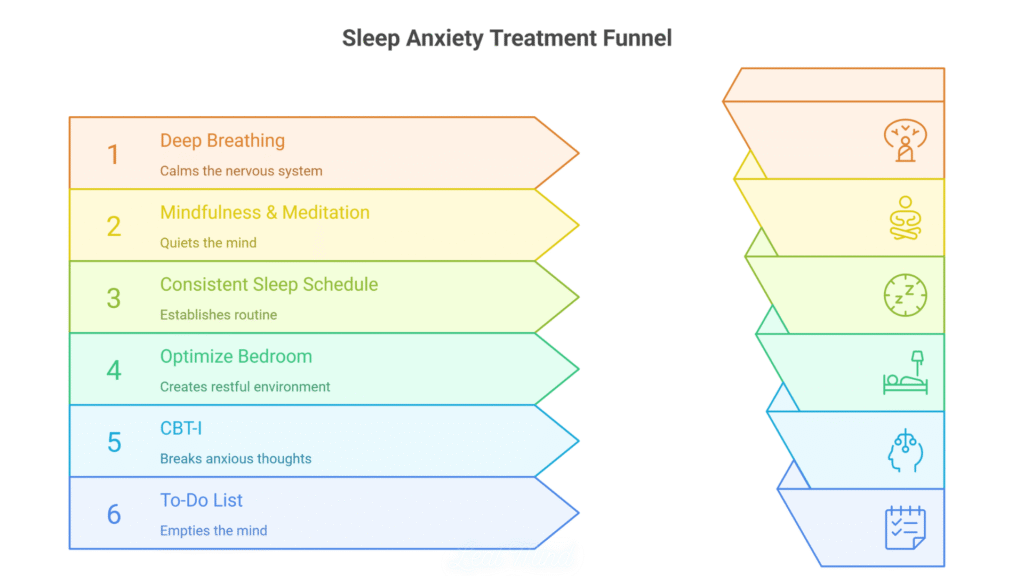
Here’s what works for sleep anxiety treatment:
- Deep breathing: Box breathing (4-4-4-4) or 4-7-8 breathing calms the nervous system instantly.
- Mindfulness & meditation: Mindfulness means focusing on the present moment without judgment, and meditation uses techniques to quiet your mind. Both help prepare for restful sleep and address somniphobia (the fear of sleep).
- Consistent sleep schedule: Same bedtime and wake time daily.
- Optimise your bedroom: Cool, dark, and quiet.
- Cognitive Behavioural Therapy for Insomnia (CBT-I): Break the link between your bed and anxious thoughts.
- Write a to-do list: Empty your mind before bed.
Small, consistent changes can have a major impact on sleep and anxiety.
Conclusion: Overcoming Anxiety at Night
If you often think, “I get anxiety at night and don’t know why,” remember—this is a common and manageable experience. Sleep research and mental health experts suggest that nighttime anxiety is closely linked to hormonal rhythms and cognitive patterns. Nighttime anxiety isn’t your fault—it’s often the result of interconnected biological, psychological, and environmental factors.
Start small: set a bedtime, reduce caffeine, and create a calming sleep environment. Add breathing exercises or mindfulness practices, and notice how your nights gradually improve.
Consistency, not perfection, transforms your sleep and peace of mind over time.
FAQs
Why do I get anxiety at night?
At night, your brain has fewer distractions, making thoughts more intense. Hormonal changes and fatigue can also increase worry. For a detailed understanding of how anxiety manifests and its early signs, check Early Warning Signs of Anxiety Symptoms.
Why is anxiety worse at night?
Anxiety often intensifies at night due to reduced distractions and fluctuating stress hormones. To explore how mental health and emotional states affect your sleep patterns, see Mental Health Statistics 2026.
How to calm anxiety at night quickly?
Deep breathing, limiting screen time, and a calming routine can help. For practical mindfulness exercises and quick stress relief techniques, read Mindfulness and Relaxation Techniques.
What is sleep anxiety?
Sleep anxiety is the stress or fear associated with falling asleep, often linked with insomnia or negative nighttime thoughts. Learn more about the connection between stress and mental health in Digital Addiction: The Silent Crisis Affecting Our Minds.
How to get rid of bad anxiety at night?
To reduce severe nighttime anxiety, focus on healthy routines, limiting caffeine, and structured relaxation. You can also explore strategies for emotional resilience in Building a Routine You’ll Actually Follow.
What causes anxiety at night, and how are sleep and anxiety connected?
Nighttime anxiety is often caused by a combination of biological and psychological factors, including stress hormones, overthinking, and disrupted sleep patterns. The connection between sleep and anxiety is very strong—poor sleep can increase anxiety levels, while anxiety itself makes it harder to fall or stay asleep. This cycle is a key reason why anxiety at night can feel difficult to control, especially if it becomes a recurring pattern.