
Mental health statistics paint a sobering picture: more than 1 in 5 U.S. adults experience mental illness each year, while over 1 billion people worldwide are living with mental health disorders. Depression and anxiety alone cost the global economy an estimated $1 trillion annually. Despite these staggering numbers, only 50.6% of adults with mental health issues received treatment in 2022.
We’ve compiled comprehensive mental health facts and statistics about mental health to help you understand the current landscape. This article covers global and U.S. mental health disorders, youth mental health trends, demographic breakdowns, treatment access gaps, and the economic impact of mental health issues. Whether you’re researching for personal understanding or professional purposes, you’ll find the latest data-driven insights here.
Table of Contents
Global Mental Health Statistics and Prevalence
Mental Health Disorders Worldwide
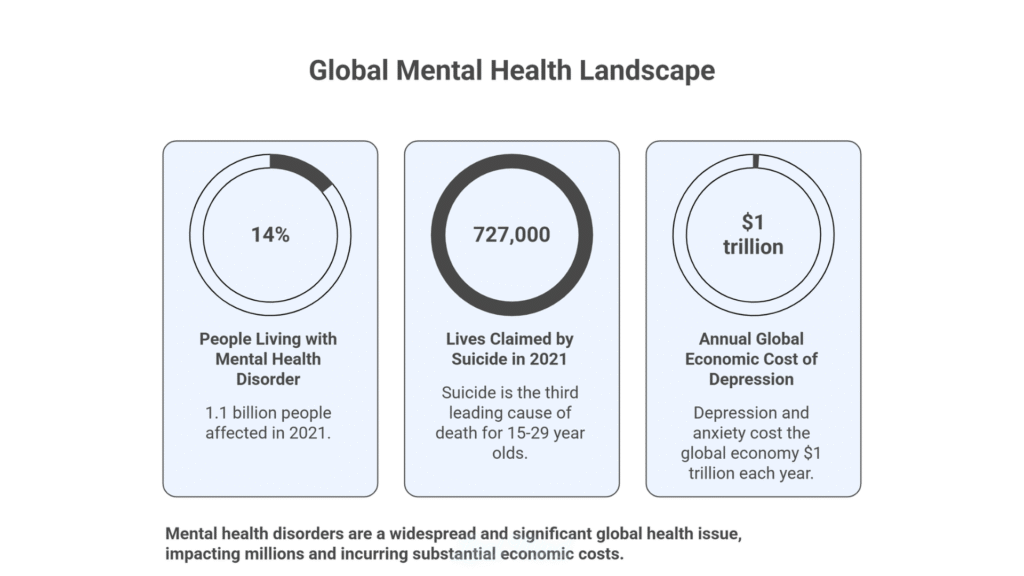
Nearly 1 in 7 people around the world live with a mental health disorder. In 2021, approximately 1.1 billion people were living with a diagnosable mental disorder, with anxiety and depressive disorders representing the most common conditions. Mental health issues affect people across all ages, income levels, and communities, contributing significantly to global health loss.
The human cost extends beyond prevalence rates. Suicide claimed an estimated 727,000 lives in 2021 alone. Among young people aged 15 to 29, death by suicide ranks as the third leading cause. The economic burden mirrors the human toll, as depression and anxiety cost the global economy $1 trillion each year in lost productivity.
Mental disorders jumped from 12th to 5th place among top causes of health loss worldwide between 1990 and 2023. Countries with the highest age-standardized prevalence rates include The Netherlands, Portugal, Australia, the United Kingdom, and Ireland.
Mental Health Statistics in the United States
Mental illness affects more than 1 in 5 U.S. adults. In 2022, an estimated 59.3 million adults aged 18 or older lived with any mental illness (AMI), representing 23.1% of the adult population. Serious mental illness (SMI) affected 15.4 million adults, or 6.0% of the population.
Age patterns reveal concerning trends. Young adults aged 18-25 had the highest prevalence of AMI at 36.2%, compared to 29.4% for adults aged 26-49 and 13.9% for those 50 and older. Adults reporting two or more races showed the highest prevalence at 35.2%, while Asian adults had the lowest at 16.8%.
Most Common Mental Disorders
Anxiety disorders affect 359 million people worldwide, including 72 million children and adolescents. Depression impacts 280 million people globally, with 23 million children and adolescents affected. In the United States, anxiety disorders affect 19.1% of adults annually, while major depressive disorder affects 15.5%.
Other significant conditions include bipolar disorder (37 million people worldwide), PTSD (4.1% of U.S. adults), and schizophrenia (23 million people, or 1 in 345 globally)[22].
Mental Health by Gender
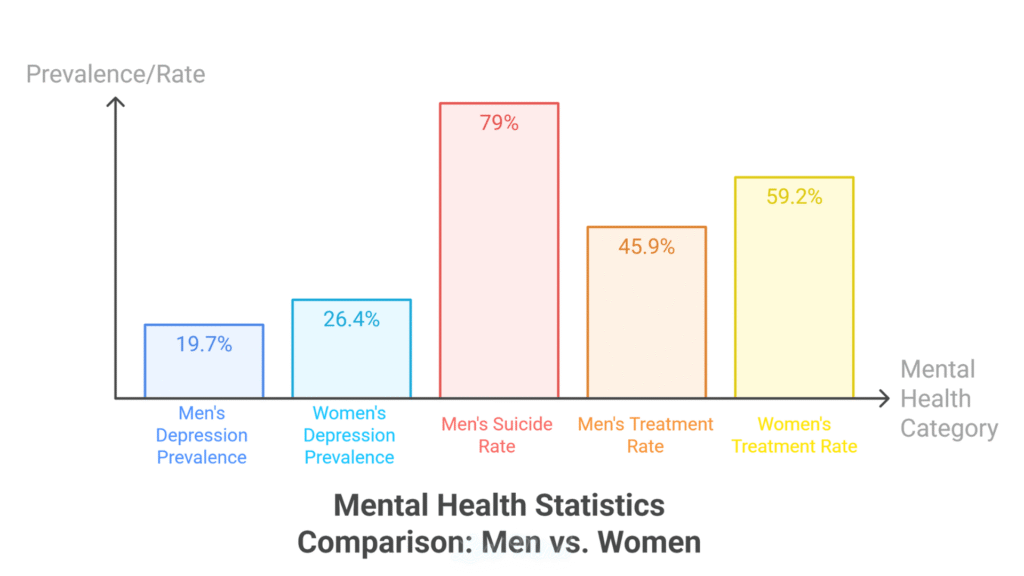
Females experience mental illness at higher rates than males. The observed prevalence of AMI stands at 26.4% for females compared to 19.7% for males[4]. Female adults report 1.8 times higher rates of diagnosed depression than males (26.4% vs 14.4%).
Despite lower overall prevalence, males face significantly higher suicide risk. Men die by suicide at nearly four times the rate of women. In England, three-quarters of registered suicides occur among men. Men aged 40 to 49 have the highest suicide rates in the UK.
Youth Mental Health Statistics
Mental Health in Teens Statistics
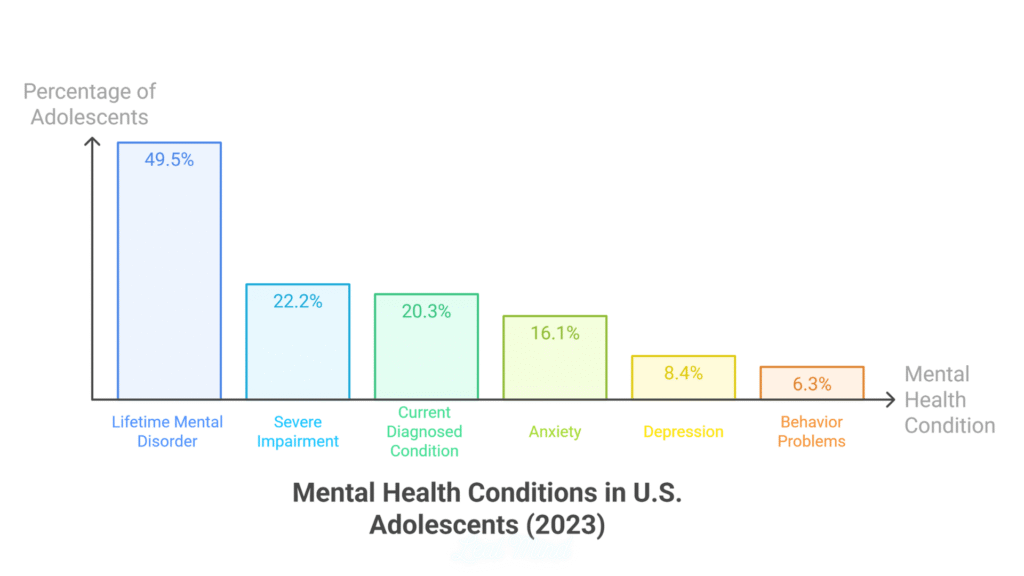
Adolescent mental health has reached crisis levels. An estimated 49.5% of U.S. adolescents aged 13-18 experienced any mental disorder during their lifetime, with 22.2% suffering severe impairment. In 2023, over 5.3 million adolescents ages 12-17 (20.3%) had a current diagnosed mental or behavioral health condition. Anxiety affected 16.1% of adolescents, depression 8.4%, and behavior problems 6.3%.
Between 2016 and 2023, diagnosed mental health conditions among adolescents increased 35%, with anxiety rising 61% and depression climbing 45%. Females showed higher rates of anxiety (20.1% vs 12.3%) and depression (10.9% vs 6.0%), while males had more behavior problems (8.2% vs 4.3%). Globally, one in seven adolescents aged 10-19 experiences a mental disorder.
Student Mental Health Statistics
College campuses face unprecedented demand for mental health services. During 2020-2021, more than 60% of college students met criteria for at least one mental health problem. Among college students, 36% have been diagnosed with anxiety and 30% with depression. Nearly 40% of high school students experienced persistent feelings of sadness or hopelessness, with 30% reporting poor mental health.
Suicide Statistics Among Young People
Suicide ranks as the second leading cause of death for ages 10-14 and third for ages 15-29. In 2021, 20% of high school students seriously considered attempting suicide, and 9.5% attempted suicide. Between 2016 and 2021, suicide self-injury cases among patients ages 5-18 at children’s hospital emergency departments increased 168.6%. Female students attempted suicide at nearly double the rate of males (12.6% vs 6.4%).
LGBTQ+ Youth Mental Health
LGBTQ+ youth face disproportionate mental health challenges. In 2024, 39% seriously considered attempting suicide, including 46% of transgender and nonbinary youth. Nearly 20% of LGBTQ+ students attempted suicide in the past year. Furthermore, 66% experienced recent anxiety symptoms and 53% reported depression. Half of LGBTQ+ youth who wanted mental health care were unable to access it.
Mental Health Statistics by Demographics
Mental Health Statistics by Race and Ethnicity
Annual prevalence of mental illness varies significantly across racial and ethnic groups. Non-Hispanic Multiracial adults show the highest rate at 35.5%, followed by American Indian or Alaska Native at 25.9%, White at 25.1%, Hispanic or Latino at 20.7%, Black at 20.9%, and Asian at 17.0%. However, treatment access tells a different story. Among adults with mental illness, 57.9% of White individuals receive treatment compared to 44.1% of Hispanic, 38.5% of Black, and only 32.5% of Asian adults.
Racial and ethnic minority adolescents face similar disparities. Non-Hispanic White adolescents received mental health visits at 31.7%, while this dropped to 21.9% among Black adolescents and 25.6% among Hispanic adolescents. From 2008-2012, 46.3% of White adults with mental illness received services, compared with 30% of Black adults, 27% of Hispanic adults, and 18.1% of Asian adults.
Men’s Mental Health Statistics
Six million men experience depression annually in the United States. Despite lower overall prevalence at 19.7% compared to women, men die by suicide at four times the rate of women, accounting for 79% of suicide deaths. In 2022, 39,282 men died by suicide. Comparatively, only 45.9% of men with mental illness received treatment in 2023. Men also die from alcohol-related causes at 62,000 versus 26,000 for women and are two to three times more likely to misuse drugs.
Women’s Mental Health Statistics
Women experience mental illness at 26.7% annually compared to 20.0% for men. Depression affects women at twice the rate of men, with diagnosed depression rates of 26.4% for females versus 14.4% for males. Women are also twice as likely to experience PTSD and generalized anxiety disorder. Approximately 85%-95% of people with anorexia nervosa or bulimia and 65% with binge eating disorder are women. Women are more likely to seek help, with 59.2% receiving treatment compared to 42.1% of men.
Mental Health in Specific Communities
LGBTQ+ individuals face disproportionate mental health challenges, with 53.2% experiencing mental illness annually. Their treatment rate stands at 63.1%, higher than the general population. American Indian and Alaska Native populations report higher rates of PTSD and alcohol dependence than any other ethnic or racial group.
Mental Health Treatment Access and Gaps
Mental Health Treatment Statistics
Half of adults with mental illness received treatment in 2022, leaving 48% without care. Treatment rates vary by gender, with 56.9% of females receiving care compared to 41.6% of males. Young adults aged 18-25 had slightly lower treatment rates at 49.1% versus 52.7% for those 50 and older. In 2022, 23% of adults received mental health treatment, up from 19% in 2019. Women were nearly twice as likely to receive treatment as men (29% vs 17%).
Barriers to Mental Health Care
Cost remains the primary barrier, with 65% of adults citing affordability as a reason for not receiving services. The national average wait time for behavioral health services stands at 48 days. Furthermore, 94 million Americans waited longer than one week for mental health services. Research shows that 95% of people reported at least one barrier to accessing care. Only 20% of mental health practitioners accept insurance, forcing many to pay out-of-pocket.
Insurance Coverage for Mental Health
All Marketplace plans cover mental health and substance abuse services as essential health benefits under the Affordable Care Act. The Mental Health Parity and Addiction Equity Act of 2008 requires comparable coverage for mental health and physical health services. Despite these protections, only 4% of Americans are aware of parity laws. In addition, 43% of insured adults said there was a time they did not get needed mental health treatment.
Mental Health Workforce Shortages
As of December 2025, 137 million people (40% of the U.S. population) live in Mental Health Professional Shortage Areas. More than half of U.S. counties lack a practicing psychiatrist. The United States faces projected shortages of 43,660 to 93,940 psychiatrists by 2037. Burnout compounds the problem, with 93% of behavioral health workers experiencing it. Only 46% of psychiatrists accepted Medicaid payments from new patients in 2017.
Economic Impact of Mental Health Issues
Mental health inequities cost an estimated $477.5 billion in 2024. By 2040, excess spending is projected to exceed $1.3 trillion annually, with cumulative costs reaching nearly $14 trillion. Untreated mental illness reduces GDP by 1.7%, equivalent to $282 billion. Depression ranks as a leading cause of disability worldwide, with one in eight U.S. emergency department visits related to mental health disorders.
Conclusion
Mental health challenges have reached unprecedented levels, significantly affecting millions worldwide. As we’ve shown above, the statistics reveal troubling gaps in treatment access despite one in five adults experiencing mental illness. The economic burden evidently exceeds $1 trillion annually, yet only half receive necessary care.
We must prioritize expanding mental health services, eliminating cost barriers, and addressing workforce shortages. Understanding these statistics equips you to advocate for better mental health support in your community.
FAQs
How many adults in the United States experience mental illness each year?
How many adults in the United States experience mental illness each year? More than 1 in 5 U.S. adults experience mental illness annually. In 2022, approximately 59.3 million adults aged 18 or older (23.1% of the adult population) lived with any mental illness, while 15.4 million adults (6.0%) experienced serious mental illness.
What are the most common mental health disorders globally?
Anxiety disorders and depression are the most prevalent mental health conditions worldwide. Anxiety disorders affect 359 million people globally, including 72 million children and adolescents, while depression impacts 280 million people, with 23 million being children and adolescents.
Why do men have higher suicide rates despite lower mental illness prevalence?
Men die by suicide at nearly four times the rate of women, accounting for 79% of suicide deaths, even though they have lower overall mental illness prevalence (19.7% compared to women’s 26.7%). This disparity is partly attributed to men being less likely to seek treatment, with only 45.9% of men with mental illness receiving care in 2023.
What percentage of people with mental illness actually receive treatment?
Only about half of adults with mental illness receive treatment. In 2022, 50.6% of adults with mental health issues received care, leaving 48% without treatment. Treatment rates vary by gender, with 56.9% of females receiving care compared to 41.6% of males.
How severe is the mental health workforce shortage in the United States?
The mental health workforce shortage is critical, with 137 million people (40% of the U.S. population) living in Mental Health Professional Shortage Areas as of December 2025. More than half of U.S. counties lack a practicing psychiatrist, and the country faces projected shortages of 43,660 to 93,940 psychiatrists by 2037.